

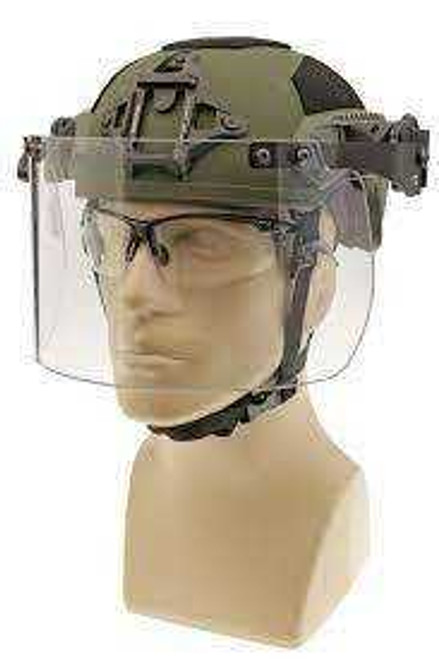
What is a ballistic face shield and what does it protect against?
A ballistic face shield is a transparent protective component designed to shield the face and eyes from ballistic threats, fragmentation, and blunt impact. Unlike goggles or riot visors, ballistic face shields are engineered to meet specific ballistic protection standards while maintaining optical clarity. They are commonly used in environments where operators may face close-range threats, debris, or secondary fragmentation. Ballistic face shields add a critical layer of protection to the helmet system, reducing the risk of facial injury while allowing the wearer to maintain visibility and awareness.
What ballistic rating do face shields typically provide?
Most professional ballistic face shields are rated to NIJ Level IIIA, offering protection against common handgun threats and fragmentation. This level is selected because it balances meaningful protection with manageable weight and optical clarity. Higher levels of protection would significantly increase thickness and weight, negatively impacting usability and comfort. As with other protective equipment, the appropriate rating is determined by threat environment, duration of wear, and integration with other protective systems.
How do ballistic face shields integrate with helmets?
Ballistic face shields are designed to mount directly to compatible ballistic helmets using manufacturer-specific attachment systems. Proper integration ensures the shield can be raised or lowered smoothly, remains stable during movement, and aligns correctly with the wearer’s field of view. Compatibility is critical—poor mounting can cause instability, reduce visibility, or interfere with other helmet-mounted equipment. A properly integrated face shield becomes part of a unified protective system rather than an add-on accessory.
Do ballistic face shields affect visibility or mobility?
Modern ballistic face shields are engineered to preserve visibility while providing protection. High-quality shields use optically clear materials designed to minimize distortion and maintain situational awareness. While any additional protective equipment adds weight, well-designed face shields are balanced to reduce fatigue and allow controlled movement. Proper helmet fit and suspension play an important role in maintaining comfort during extended wear.
Who typically uses ballistic face shields?
Ballistic face shields are commonly used by SWAT teams, Bomb Technicians, military EOD personnel, corrections teams, and tactical response units operating in environments where facial protection is necessary. They are typically deployed during high-risk operations involving close contact, explosive hazards, or increased risk of fragmentation.
How does EOD Gear support ballistic face shield selection?
EOD Gear supplies NIJ-rated ballistic face shields and compatible helmet systems to authorized agencies and qualified users. Our approach emphasizes proper integration, compatibility, and real-world usability, helping teams select equipment that functions reliably as part of a complete protective ensemble. As a GSA Contract Holder, we accept P-Cards, Purchase Orders and GSA purchases.