



What are grappling hooks used for in EOD and tactical work?
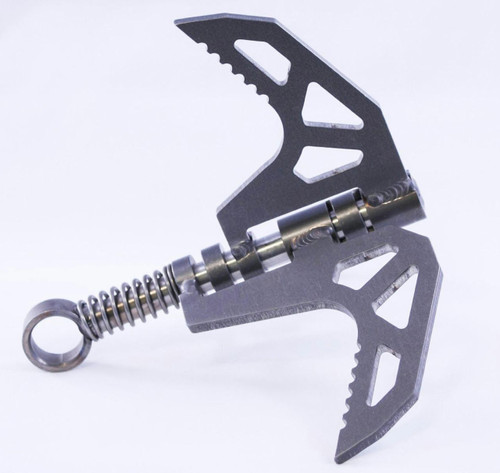
In EOD and engineer work, grappling hooks are primarily remote-manipulation tools: thrown or placed with a line to drag, shift, or disturb suspect items, wire, and obstacles from a standoff distance. Tactical teams also use them for clearing debris, snagging concertina, and moving objects a person should not approach.
What is a hook and line kit?
A hook and line kit combines hooks, lines, pulleys, carabiners, and anchoring hardware so an operator can rig a pull on a suspect item and work it from a distance. The grappling hook is the workhorse attachment for dragging and repositioning, which is why hooks are also sold individually as replacements and add-ons.
Why move a suspect item remotely instead of by hand?
Standoff. Remote movement lets the technician disturb, reposition, or open a problem item while staying at a safe distance, reducing time spent next to the hazard. That principle drives hook, line, and pulley design across EOD, combat engineer route clearance, and demining programs.
What should I look for in a grappling hook?
Consider tine configuration and how well it bites the objects you expect to move, overall weight for accurate throws, line attachment hardware, and strength of the hook body. Folding designs pack smaller in a kit; fixed designs have fewer moving parts to fail under load.
Who uses grappling hooks professionally?
Military EOD technicians, public safety bomb squads, combat engineers, route clearance teams, demining organizations, and tactical units. Grappling hooks are unrestricted hand equipment, though buyers should train on rigging and pulls under their organization's procedures before operational use.
Does EOD Gear support agency purchases of hooks and rigging?
Yes. EOD Gear is GSA-authorized, ISO 9001:2015 certified, and ITAR registered, supporting purchase orders, GSA orders, and quotes for EOD units, bomb squads, and engineer teams. Email govsales@EOD-gear.com for agency pricing and hook-and-line kit recommendations.