
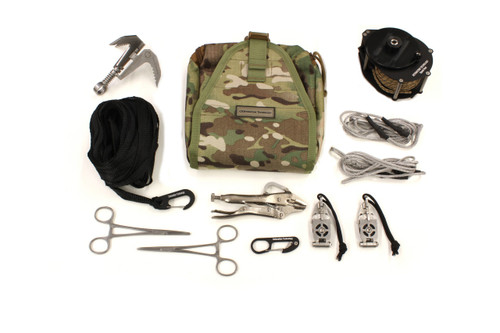


Q: What is a hook and line kit used for?
A: Hook and line kits are used to remotely move, reposition, or manipulate suspicious packages, containers, or ordnance. They are commonly employed when a booby trap, anti-handling device, or secondary hazard is suspected.
Q: Why are hook and line kits important in EOD operations?
A: Hook and line kits allow operators to create distance from a potential hazard. Remote movement reduces exposure to blast, fragmentation, and secondary devices during assessment or render-safe procedures.
Q: Are hook and line kits only used for explosive threats?
A: While commonly associated with explosive ordnance, hook and line kits may also be used to remotely move suspicious items during search, clearance, or investigative operations where direct handling presents unacceptable risk.
Q: What components are typically included in a hook and line kit?
A: A hook and line kit may include hooks of various shapes, line or cordage, pulleys, carabiners, anchors, and line management accessories. Specific configurations vary based on mission requirements and user preference.
Q: Do hook and line kits provide protection against detonation?
A: No. Hook and line kits do not stop an explosive event. Their purpose is to increase standoff distance and control movement, reducing the operator’s exposure if a device initiates.
Q: How do operators choose the right hook and line kit?
A: Selection should be based on the types of threats encountered, expected loads, required standoff distance, operating environment, and standard operating procedures. Proper training and technique are critical to effective use.
Q: Are hook and line kits standardized across agencies?
A: No. While hook and line principles are widely taught, kit contents and configurations vary by agency, mission profile, and operational doctrine.