The Ultimate Guide to Tactical Breaching Equipment
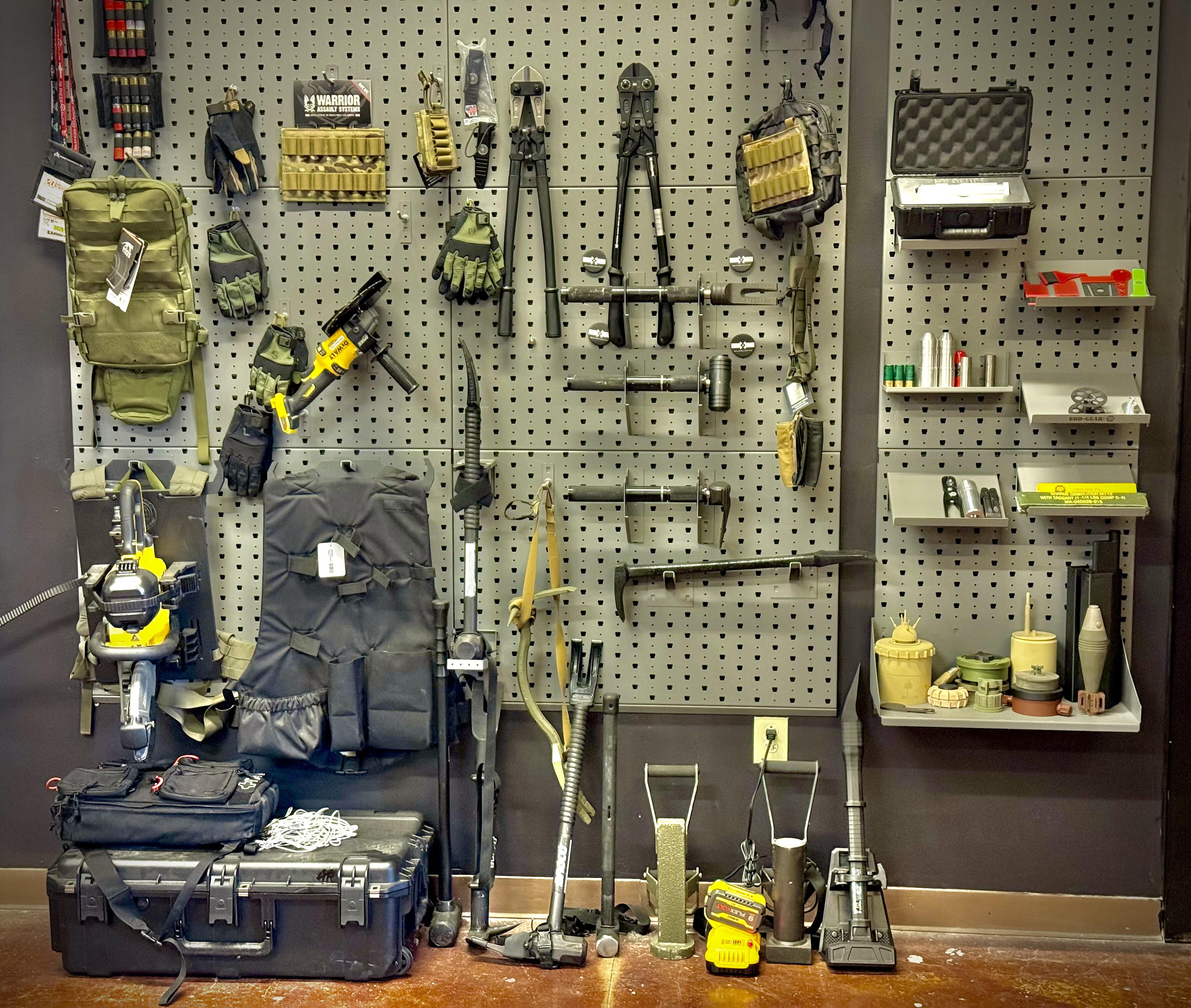
Gaining rapid, controlled access to fortified structures is a critical capability for law enforcement, military special operations forces, and emergency response teams. When speed, surprise, and safety are essential, specialized breaching equipment is used to defeat doors, locks, windows, and reinforced barriers.
This content is built on operational doctrine, field application knowledge, and real-world breaching methodologies used by military, EOD, and law enforcement professionals. It reflects practical experience in forced entry operations, equipment deployment, and mission-based decision-making under high-risk conditions. The objective is to provide clear, accurate, and actionable insight into breaching disciplines without commercial bias.
Shop Breaching Equipment by Method
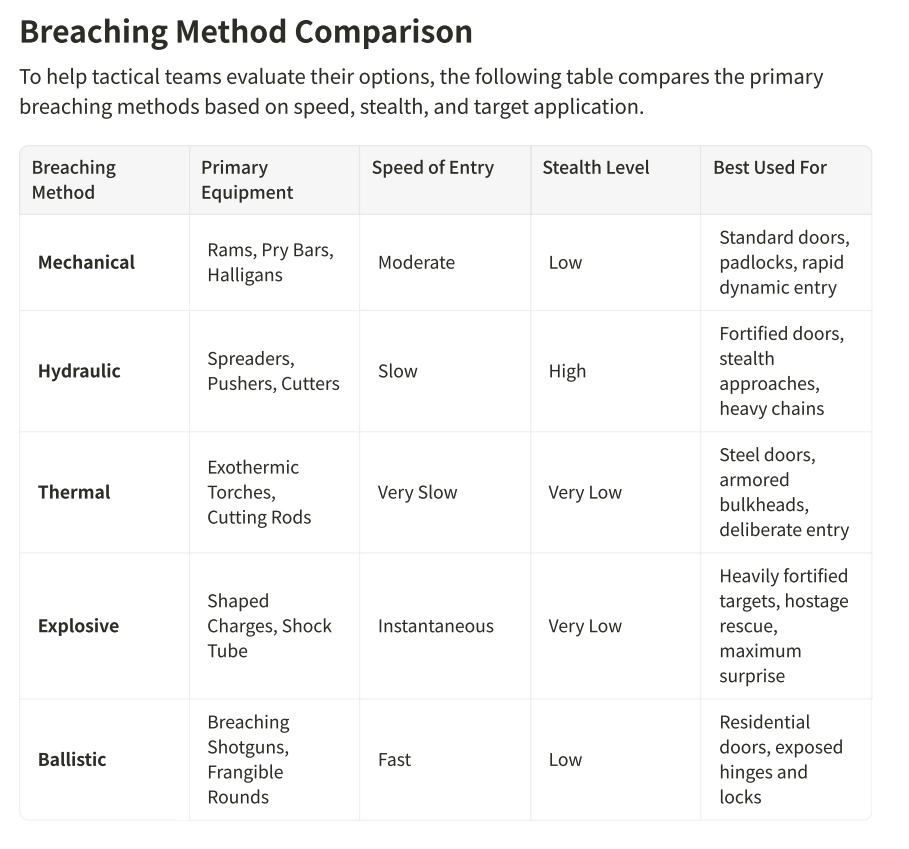
Breaching is not a one-size-fits-all discipline. Operators must assess the structure, entry requirements, and acceptable level of damage before selecting a method. To meet these demands, breaching equipment is divided into five primary categories: mechanical, hydraulic, thermal, explosive, and ballistic.
Mechanical Breaching Equipment
Mechanical breaching is the most common method of forced entry. It relies on physical force, leverage, and impact to defeat locks, hinges, or entire entry points. Tools such as battering rams, pry bars, Halligan tools, axes, and sledgehammers are standard in this category.
This method is reliable and cost-effective, making it ideal for standard doors and quick deployments. However, it requires physical effort and places the operator directly at the point of entry, which can increase risk in hostile environments.
Shop Mechanical Breaching Tools
Hydraulic Breaching Equipment
Hydraulic breaching equipment uses fluid pressure to generate powerful, controlled force. It is commonly used against reinforced doors and multi-point locking systems that cannot be defeated manually.
Hydraulic spreaders, door pushers, and cutters allow operators to quietly and effectively force entry or cut through heavy materials. This method is particularly valuable for stealth operations, although it is slower and involves heavier equipment.
Shop Hydraulic Breaching Tools
Thermal Breaching Equipment
Thermal breaching uses extreme heat to cut through hardened materials such as steel doors, reinforced locks, and armored barriers. Exothermic cutting torches generate temperatures high enough to melt metal quickly and efficiently.
This method is highly effective for fortified targets but is slower and produces visible light, sparks, and fumes. It is typically used in deliberate operations where speed is less critical than capability.
Shop Thermal Breaching Tools & Broco Kits
Explosive Breaching Equipment
Explosive breaching is the fastest and most dynamic method of entry. It uses precisely calculated charges to instantly defeat doors, walls, or other barriers.
This approach is reserved for highly trained personnel due to the risks involved. It requires careful planning to ensure the blast achieves the intended result without causing unintended damage or injury. Explosive breaching is often used in high-risk scenarios where speed and shock are essential.
Shop Explosive Breaching Equipment
Ballistic Breaching Equipment
Ballistic breaching uses specialized firearms and ammunition to destroy locks, hinges, or other structural weak points. Typically performed with a 12-gauge shotgun and frangible rounds, this method allows for rapid entry while minimizing the risk of over-penetration.
It is effective for standard residential and commercial doors but is not suitable for heavily reinforced structures.
Operational Considerations
Selecting the appropriate breaching equipment depends on the target environment and mission objectives. Each method offers distinct advantages and limitations, and successful operations depend on choosing the right tool for the situation. By understanding these breaching disciplines, teams can ensure effective, controlled, and mission-focused entry.
When mission success depends on having the right breaching capability, equipment selection isn’t something to leave to chance. Whether you’re outfitting a unit, upgrading existing tools, or planning for specialized operations, having the right solution in place matters.
EOD Gear® supports government and agency procurement processes, is available on GSA, and accepts purchase orders to streamline acquisition. Our team works directly with units to ensure you get reliable, mission-ready equipment without delays.
Get the Right Breaching Equipment for Your Team
Call (938) 336-3639 or send your requirement through the contact form. GSA and agency purchase orders welcome.
Request a QuoteBreaching Equipment FAQs
What is breaching equipment?
Breaching equipment refers to specialized tools and systems used to gain forced entry into structures, vehicles, or barriers in tactical or emergency situations.
What are the main types of breaching equipment?
The five main types are mechanical, hydraulic, thermal, explosive, and ballistic breaching equipment, each designed for specific operational needs.
What is the safest breaching method?
Mechanical and hydraulic breaching are generally considered the safest methods because they do not involve explosives and reduce the risk of overpressure or fragmentation.
When is explosive breaching used?
Explosive breaching is used when rapid entry is critical, particularly in high-risk situations such as hostage rescue or heavily fortified targets.
What is thermal breaching used for?
Thermal breaching is used to cut through hardened materials like steel doors, reinforced locks, and armored barriers using high heat.
What is ballistic breaching?
Ballistic breaching uses a shotgun with specialized frangible rounds to quickly destroy locks or hinges while minimizing the risk of ricochet or over-penetration.
Why is hydraulic breaching preferred for stealth?
Hydraulic tools operate quietly and apply controlled force, making them ideal for situations where maintaining a low profile is important.
How do teams choose the right breaching method?
Teams evaluate factors such as the type of structure, required speed of entry, acceptable noise level, potential risks, and overall mission objectives to determine the best approach.