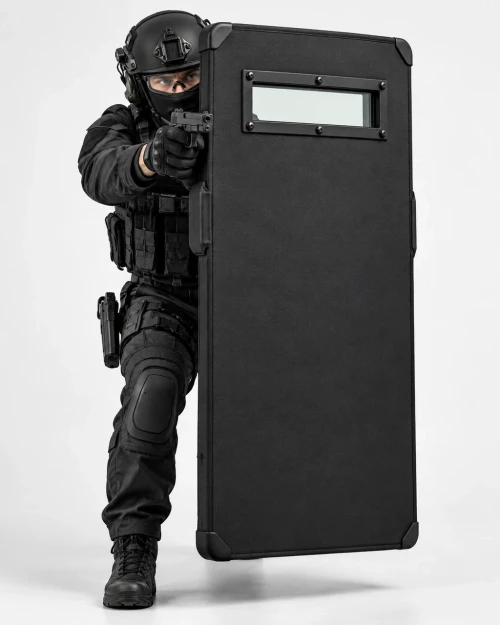
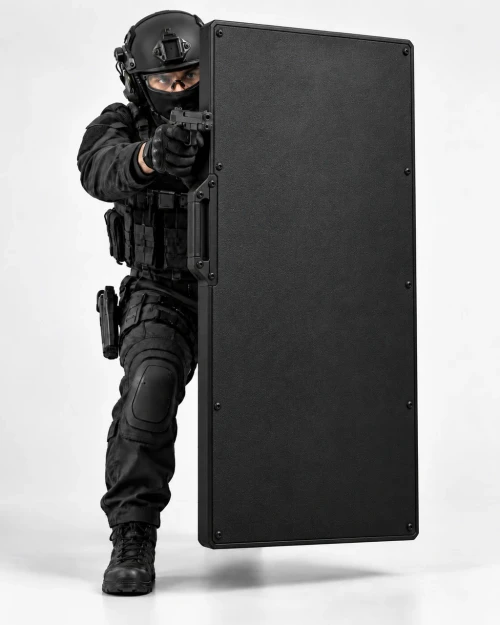
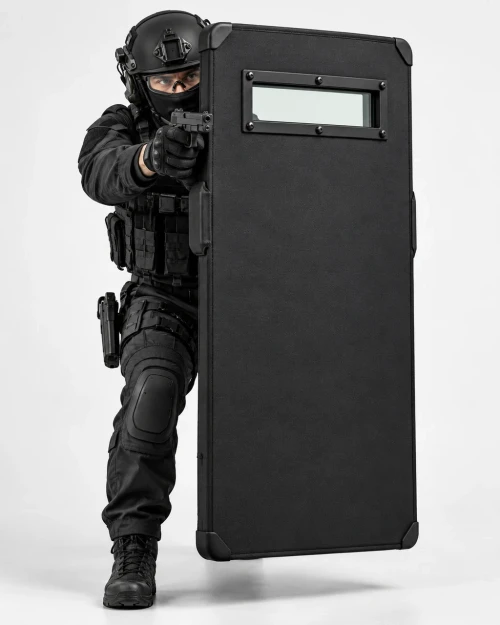
A SWAT shield is specified around one question: how long can the operator actually hold it in a ready position while the situation develops? At 17 pounds with a viewport, this panel sat at the heavier end of the lightweight Level III class, and that weight bought rifle protection and a sightline at the same time.
What this shield was rated to stop
Level III, compliant with NIJ 0108.01, tested against:
- 7.62x51mm (M80, 147gr at 2,780 fps)
- 7.62x39mm (Chinese and Russian MSC LC)
- 5.56x45mm (M193, in 55, 62 and 77gr)
- 5.45x39mm MSC
Plus all lesser threats, which includes the common duty pistol calibers — .44 Magnum, .357 and 9mm among them. A Level III panel covers handgun threats by definition, so a team carrying Level III does not need a separate Level IIIA shield for pistol protection.
What Level III does not cover is steel-core armor-piercing rifle ammunition. That is a Level IV specification, and Level IV shields are substantially heavier.
Why weight is the real SWAT decision
17 pounds is manageable for a stack moving a short distance. It is punishing on a long approach, a sustained perimeter hold, or any callout where the shield operator is also the one talking. Before choosing a weight class, time your operators holding a loaded shield in a genuine ready position rather than at rest. The number is usually lower than people expect, and it should drive the purchase more than the spec sheet does.
What the viewport is for
With a viewport, the operator keeps eyes on the threat through the approach instead of working blind behind the panel or breaking cover to look. For entries and barricaded-subject callouts, that sightline is normally worth the weight. For shields used as a mobile barrier, it often is not.
This shield is no longer in our line
We no longer supply this SWAT shield. We do still spec and source Level III shields with viewports for tactical teams, and we would rather quote you the right current option than take an order against a discontinued part number.
Use Add To Quote on this page. Tell us your threat assessment, team size, typical callout profile, and whether you need a cutout or lighting, and we will return current options with lead times and pricing. To see the current range first, start at ballistic shields.
Who we spec shields for
EOD Gear was founded by a former U.S. Navy EOD technician. We supply law enforcement, SWAT, military and EOD units, including agencies buying on contract and through GSA. That background is why we argue about weight and handle position instead of just quoting a rating. A correctly rated shield that is too heavy to hold through a callout is not protection.
Questions tactical teams ask us about shields
Does a SWAT shield need to be Level III?
It depends entirely on the threat assessment for your jurisdiction. Level IIIA covers handgun threats at roughly half the weight. Level III adds common rifle threats and costs you weight. If rifle fire is realistic in your area of responsibility, do not downgrade to IIIA to save pounds.
How long can an operator hold 17 pounds?
Less time than most agencies plan for, especially one-handed with a pistol up. This is the most common specification error we see, and it is why we ask about callout profile before quoting.
Does the viewport reduce protection?
On a properly built shield the viewport carries the same rating as the surrounding panel. We will confirm the viewport rating in writing on any current shield before you commit.
Can we mount a light?
Yes, and specify it at quote time. Mount position changes the balance point, and balance determines how long the shield stays up.
Can we buy on contract or through GSA?
Yes. Include your contract vehicle or agency details with the quote request and we will route it correctly.
How long does a quote take?
Same or next business day for anything we stock or can source directly. Custom sizes and specialised glazing take longer, and we will tell you the lead time before you commit.