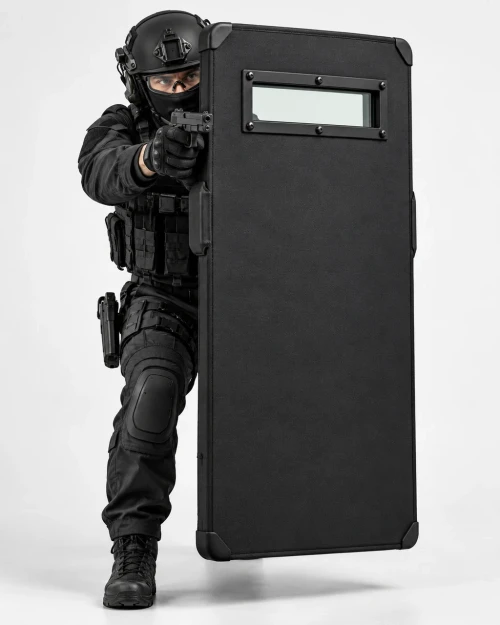
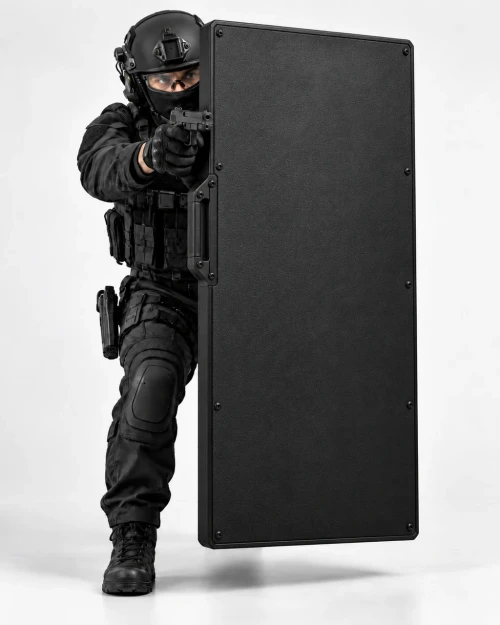
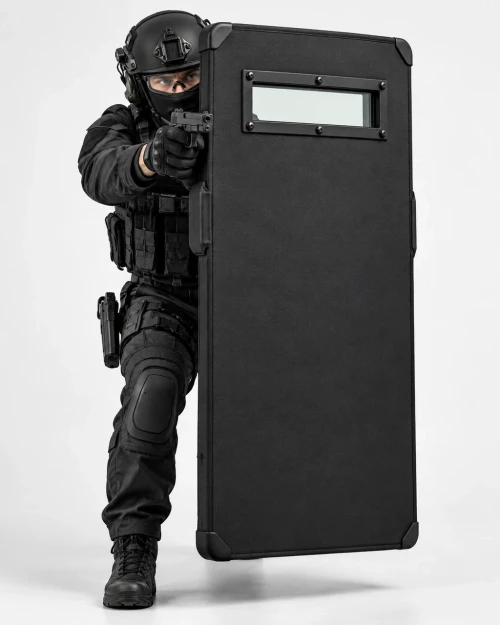
This was the broad-coverage Level III panel without a viewport: 20 x 30 inches, 15 pounds, 0.8 inches thick, with .30-06 Springfield on its tested threat list. Dropping the viewport took four pounds off the version that carried one, which is the single biggest weight decision on any shield purchase.
What this shield was rated to stop
Level III, compliant with NIJ 0108.01, tested against:
- .30-06 Springfield (LC)
- 7.62x51mm (M80, 147gr at 2,780 fps)
- 7.62x39mm (Chinese and Russian MSC LC)
- 5.56x45mm (M193, in 55, 62 and 77gr)
- 5.45x39mm MSC
Plus all lesser threats, handgun calibers included. One clarification worth making plainly, because it is misread constantly: .30-06 Springfield lead-core and .30-06 M2 AP are not the same threat. The steel-core armor-piercing round is Level IV. A Level III shield tested against .30-06 LC has not been tested against M2 AP, and no reputable supplier should let you conflate them.
Why go without a viewport
Four pounds, lower cost, and nothing to scratch, fog or replace. The operator works from the edge of the panel rather than through it. Plenty of experienced teams prefer that, because edge-work keeps the panel whole and the shield lighter. It is a tactics preference, not a compromise on protection.
Where a viewport earns its weight is sustained observation — barricaded subjects, negotiations, any situation where the operator must keep eyes on the threat for minutes rather than seconds without breaking cover.
Size and configuration
20 x 30 inches, 0.8 inches thick, 15 pounds. Offered as a rectangle or with dual cutouts, with an optional tactical cover. The dual cutout clears the firing hand for pistol work from behind the panel; the rectangle maximises uninterrupted coverage.
This shield is no longer in our line
We no longer supply this configuration. We do still spec and source Level III shields, with and without viewports, across the weight range. We would rather quote you something current than take an order against a discontinued part number.
Use Add To Quote with the rounds you are planning against, the coverage you need, and your realistic carry weight, and we will return current options with lead times and pricing. The current range is on the ballistic shields page.
Who we spec shields for
EOD Gear was founded by a former U.S. Navy EOD technician. We supply law enforcement, SWAT, military and EOD units, including agencies buying on contract and through GSA. We would rather talk you out of the wrong weight class than sell you a shield that lives in the vehicle.
Questions we get about Level III shields
Do I need a viewport?
If your operators need sustained eyes on a threat from behind cover, yes. If the shield is primarily a mobile barrier and observation happens from the panel edge, no — and you save four pounds.
Does Level III cover handgun rounds?
Yes. A Level III rating includes the lesser threats beneath it, so a team carrying Level III does not need a separate Level IIIA shield for pistol protection.
Will it stop armor-piercing rifle ammunition?
No. That is Level IV. See the note above about .30-06 lead-core versus M2 AP, which is where this misunderstanding usually starts.
How does 15 pounds compare to other shields?
Mid-range. Lighter Level III panels reach roughly 12.5 pounds at the same size; with a viewport the same coverage runs about 19. Weight tracks rating, area and construction.
Rectangle or dual cutout?
Dual cutout for pistol work from behind the shield. Rectangle for maximum uninterrupted coverage.
Can we buy on contract or through GSA?
Yes. Include your contract vehicle or agency details with the quote request and we will route it correctly.
How long does a quote take?
Same or next business day for anything we stock or can source directly. Custom sizes take longer, and we will tell you the lead time before you commit.