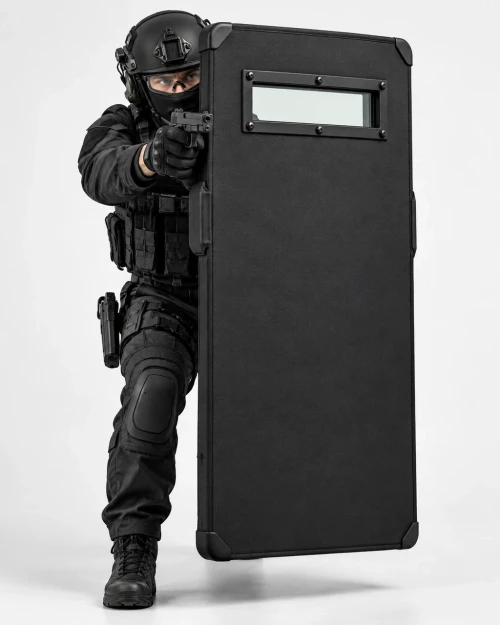
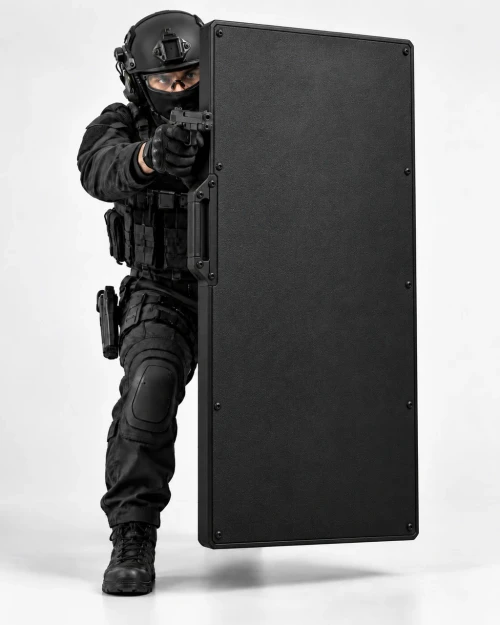
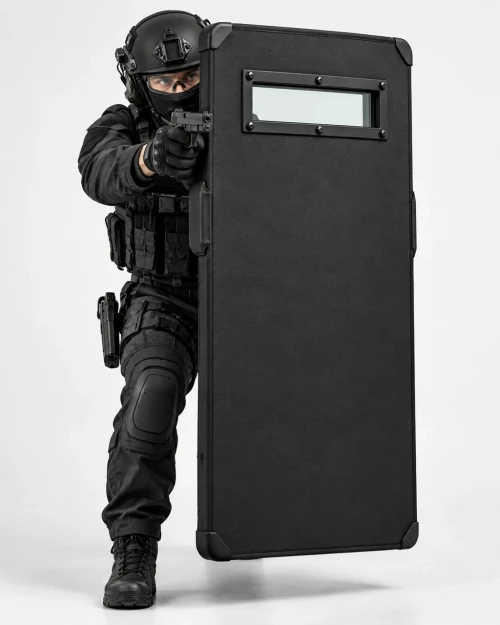
"Ultra lightweight" in shields means one thing: the lightest panel that still holds the rating you need. It is not a marketing tier, it is the outcome of choosing materials that reach Level III at the lowest achievable areal density. This panel landed at 12.5 pounds for 20 x 30 inches of rifle-rated coverage at 0.8 inches thick.
What this shield was rated to stop
Level III, compliant with NIJ 0108.01, tested against:
- 7.62x51mm (M80, 147gr at 2,780 fps)
- 7.62x39mm (Chinese and Russian MSC LC)
- 5.56x45mm (M193, in 55, 62 and 77gr)
- 5.45x39mm MSC
Plus all lesser threats, handgun calibers included. Level III does not cover steel-core armor-piercing rifle ammunition; that is Level IV, and no weight-optimised Level III panel should be specced against it.
What you give up to go light
Lighter Level III panels generally cost more per square inch, not less. You are paying for materials that reach the same rating with less mass, so the saving is in carry weight rather than budget. Expect a lighter panel to be thicker in some constructions, and treat multi-hit performance as a question worth asking rather than assuming — weight-optimised panels vary in how they handle closely spaced impacts.
Ask three things of any ultra lightweight shield before buying: the exact rounds it is tested against, its multi-hit behaviour, and its real weight with handle, cover and any lighting fitted. Quoted panel weight is rarely the weight your operator ends up holding.
Who should buy light
Teams with long approaches, smaller-framed operators, agencies where the shield operator is also running communications, and any unit where the shield has historically been left in the vehicle because it was too heavy to carry speculatively. A 12.5-pound panel that actually comes out of the truck beats a 19-pound panel that does not.
This shield is no longer in our line
We no longer supply this panel. We do still source Level III shields across the weight range, and we would rather quote you a current option than take an order against a discontinued part number.
Use Add To Quote with your threat assessment, the panel size you need, and your realistic carry limit, and we will come back with current options, lead times and pricing. The rest of the range is on the ballistic shields page.
Who we spec shields for
EOD Gear was founded by a former U.S. Navy EOD technician. We supply law enforcement, SWAT, military and EOD units, including agencies buying on contract and through GSA. We spend more time arguing about carry weight and handle geometry than about ratings, because the rating is the easy part.
Questions we get about ultra lightweight shields
Is a lighter Level III shield less protective?
Not at the rated threats. A Level III panel is a Level III panel. Where lighter constructions can differ is multi-hit performance and edge-of-panel behaviour, which is why we ask for the test data rather than just the rating.
How light can a Level III shield actually get?
This panel was 12.5 pounds at 20 x 30. Going materially below that at the same size and rating usually means either a smaller panel or a different rating. Be sceptical of numbers that sound too good without test documentation behind them.
Why is the lighter shield more expensive?
Because weight reduction at a fixed rating comes from materials, and those materials cost more. You are buying carry time, not extra protection.
Should we go IIIA instead to save weight?
Only if your threat assessment genuinely excludes rifle fire. Level IIIA is a handgun rating at roughly half the weight. Downgrading purely for comfort is the wrong reason, and we will say so.
Does it come with a viewport?
This panel was the no-viewport configuration. Adding a viewport to a comparable shield typically costs around four pounds.
How long does a quote take?
Same or next business day for anything we stock or can source directly. Custom sizes and specialised glazing take longer, and we will give you the lead time before you commit.